The Last Sabbath
Ozzy's Death and the Soundtrack of a Dying Empire

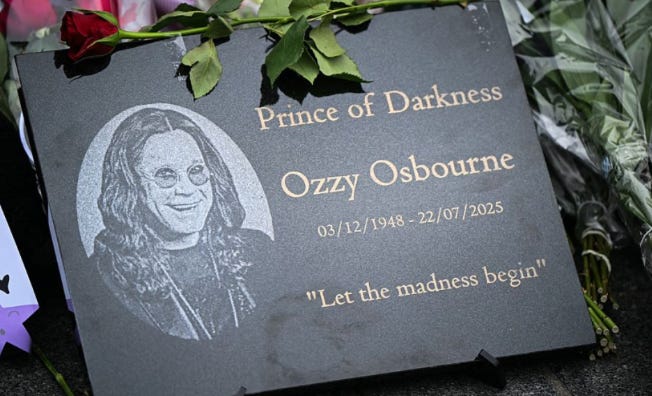
Ozzy Osbourne’s funeral is today. He died last week. Seventeen days after his final concert. Almost like the final feedback of the amplifiers was his last breath.
The moving farewell show took place in his hometown. Back to the Beginning wasn’t just a concert. It was a rite. A requiem. A cultural milestone that marked the end of something far greater than one man’s career. It felt like a mythic ending, scripted by some cosmic force.
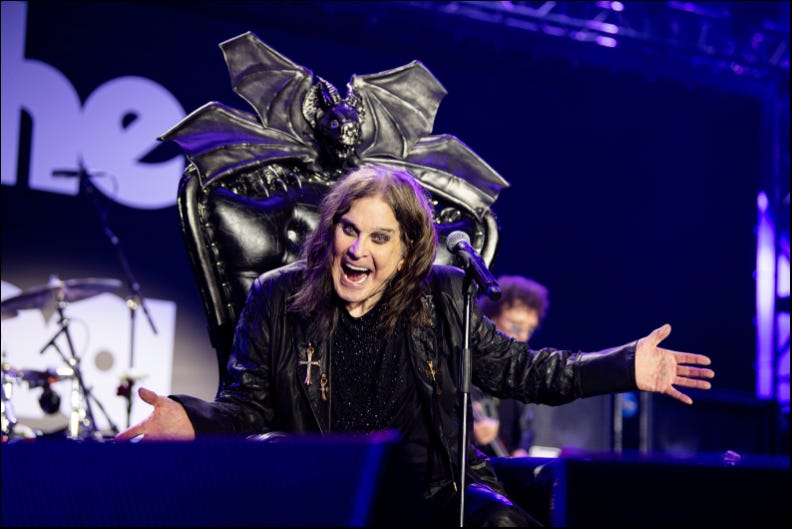
Ozzy, The Prince of Darkness—frail and trembling from Parkinson’s, yet still able to command the crowd—sat on a black throne and paid tribute to his roots and to the fans who now transcend generations and borders. Artists from around the world joined him on stage to honor him and his band, Black Sabbath. The band that gave birth to heavy metal played one last time to acknowledge the darkness in all of us. And celebrate the love that can grow from pain and despair.
The death of Ozzy Osbourne isn’t just another celebrity obituary. It is a signal. A scream from the depths of modern culture. The darkness we once danced with as outcasts has now taken center stage.
As people around the world gather to mourn The Prince of Darkness, I’m doing a deep dive into his discography, wondering what it all means…
To understand his music and legacy, you have to understand the man.
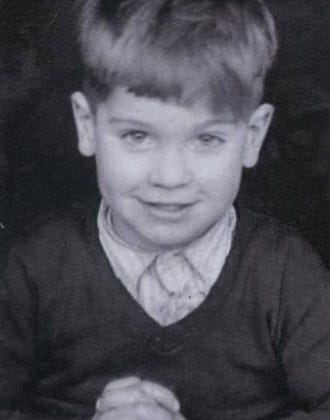
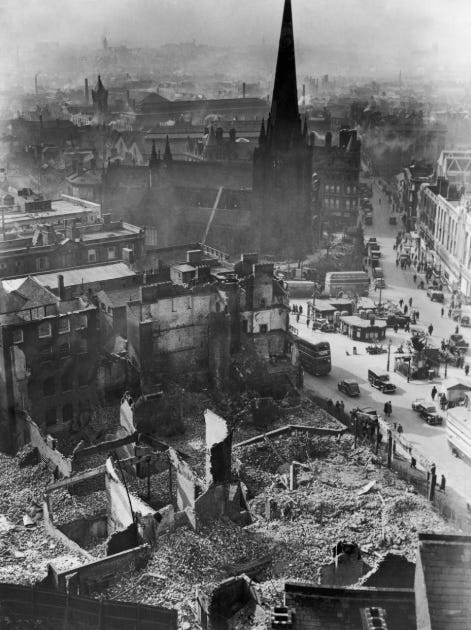
Ozzy was born John Michael Osbourne on December 3rd, 1948. He was born in Aston, a grimy, industrial district of Birmingham, England. The war had ended, but the ruins still scarred the city. Birmingham had been bombed heavily during World War II. As John grew up, kids still played in craters that used to be factories. Families lived in over-crowded, musty row houses with no plumbing. The factories that were back in operation never stopped making those metallic noises.
School was brutal for young John. He was different, dyslexic, and bullied. By fifteen, he dropped out and floated between low-paying factory jobs. Eventually, he turned to petty crime. When he arrested for burglary, he didn’t even own shoes—just borrowed gloves and his father’s slippers.
But more than poverty, it was the psychological smog of postwar Britain that left a mark. The silence of men who’d seen too much. Religion had lost its meaning beyond ritual. All that was left was to become part of the machines of industry. A system that kept people alive but never let them live. For boys like John, life felt predetermined. You went from the factory to your funeral.
So when Ozzy grabbed mic and started wailing, it wasn’t just a performance. It was a prophecy.
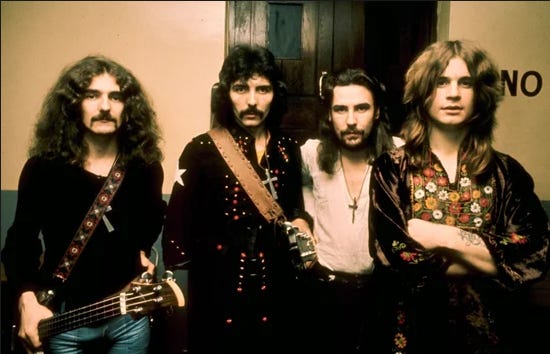
When Ozzy met bassist Geezer Butler, drummer Bill Ward, and guitarist Tony Iommi, it wasn’t just a band forming. It was a reaction combusting. Black Sabbath didn’t intend to invent a new genre. They just played what they felt: fear, alienation, and rage against the machines.
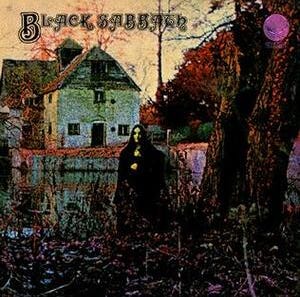
Their first album, Black Sabbath, came out in 1970. The title track begins with church bells that sound like the gates of hell opening during a funeral procession in the rain. Raw, unpolished, haunting.
But Sabbath’s music didn’t glorify evil. It exposed it.
On their second album, the opening track “War Pigs” condemned the warmongering elite for sending boys to die in Vietnam. It hit way harder than anything from the flower-power generation. “Iron Man” warned of what happens when a man is ignored and shunned by the very people he’s trying to save. “Paranoid” is a scorching confession of mental illness and the need for help that never comes.
I need someone to show me / The things in life that I can’t find / I can’t see the things that make true happiness / I must be blind.
Sabbath’s lyrics were working-class scripture. Punk in spirit. Metal in sound. Prophecy in verse. What made them controversial is also what made them enduring. They were the sound of a culture cracking. Their riffs became gospel for generations raised in the ruins of a world perpetually at war.
They tapped into something deep: the devil’s chord.
It was called Diabolus in Musica. In medieval and Renaissance Europe, the devil’s chord or devil’s interval was banned in churches and music halls. Music theorists know it as the “augmented fourth” or “diminished fifth.” It spans three whole tones and splits the octave in half—a tritone.
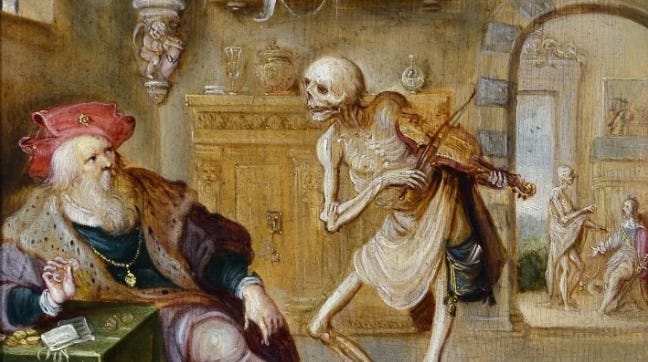
It was feared because of its dissonance. It was unstable. It didn’t resolve like most notes. And in a world that believed music should mirror divine harmony, the tritone sounded like disorder. Like something wicked was being summoned.
Centuries later, Tony Iommi would change all that.
Tony’s fingers had been maimed in a factory accident. To keep playing guitar, he had to adapt. He started using lighter strings and tuning his guitar lower. The result was a darker, heavier sound. Listen to the intros of “Iron Man” and “War Pigs,” and you’ll hear exactly what I’m talking about.
That riff—the G to C#— wasn’t just scary. It was sacred in its own way. It opened the gates to a new musical theology. One where horror was honest. Evil was out in the open. And the scream had to come before the prayer.
When Tony’s tritones met Ozzy’s prophecies, The Prince of Darkness rose from the ashes of a war-torn world.
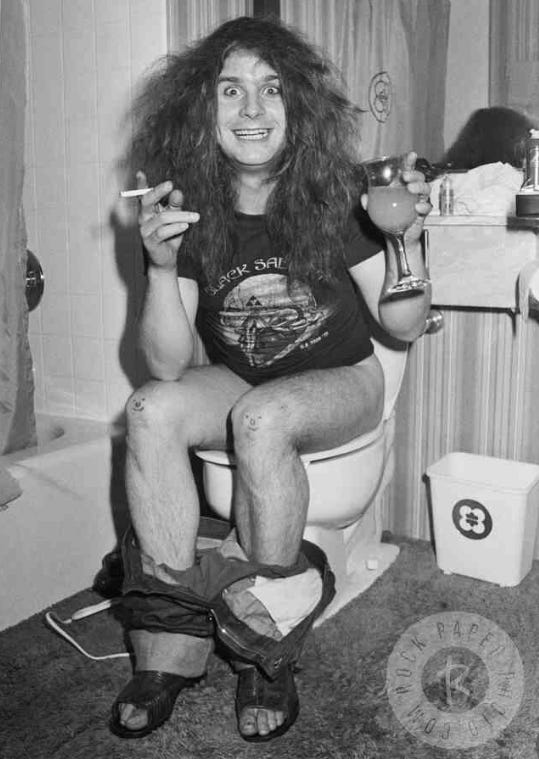
Ozzy was never just a showman. He was a walking contradiction. He leaned into his persona. And his darkness threatened to tear him apart. His drug abuse is well known. His legacy is colored by his destructive antics. Yet his lyrics portray a sensitive man speaking to struggles we all share. Even after being kicked out of the band he formed, he continued his wild ride. But he always sang from the heart.
Crazy, but that's how it goes / Millions of people living as foes / Maybe it’s not too late / To learn how to love and forget how to hate…
I’ve listened to preachers / I’ve listened to fools / I’ve watched all the dropouts / Who make their own rules / One person conditioned to rule and control / The media sells it and you live the role
Mental wounds still screaming / Driving me insane / I’m going off the rails on a crazy train.
We shouldn’t gloss over the true madness offstage. His life was wrought with violence, addiction, misogyny, and real terror. He didn’t just play the part of monster. Sometimes he was one. And yet…the world, and even his wife Sharon, forgave him. Over and over again.
Because we wanted the spectacle. We needed it. He gave voice to our rage. He personified the villain and carried the burden of being a release valve for a culture boiling over. From Vietnam to the Cold War. And a whole new side of him emerged during the 21st century war on terror.
In 2002, Ozzy became the most unlikely face of family television. The Osbournes, MTV’s chaotic and ground-breaking reality show, gave us a front-row seat to the daily dysfunction of the First Family of Metal.
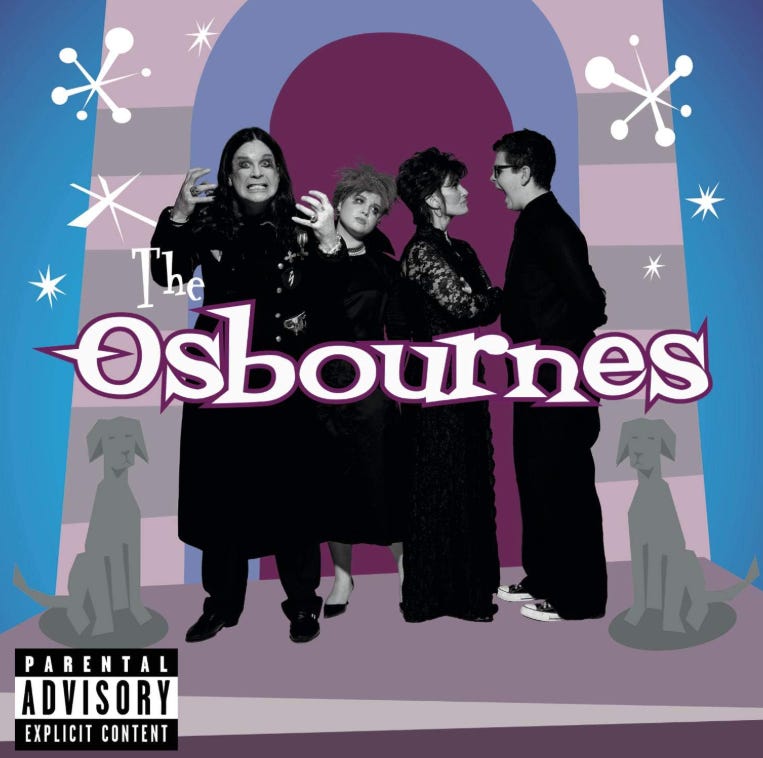
It was my introduction to Ozzy and Sabbath.
The mystique of the man became comedy. He couldn’t work the remote. He mumbled through errands and breakfast burritos. His dogs peed on the rugs. His children cursed like sailors. Sharon held it all together. His life seemed like a relatable mess—and became a huge hit.
It wasn’t the first family reality show, but it proved to networks the value of pulling back the curtains on celebrities. It broke the myth of The Prince of Darkness and gave us a new Ozzy. The stoned sitcom dad.
And yet even that now feels prophetic. It was the early 2000s. The world was reeling from 9/11. The world order was being upended. Even the truth was up for grabs. And here was Ozzy—living proof that even darkness could be packaged and commodified.
Hell got good ratings.
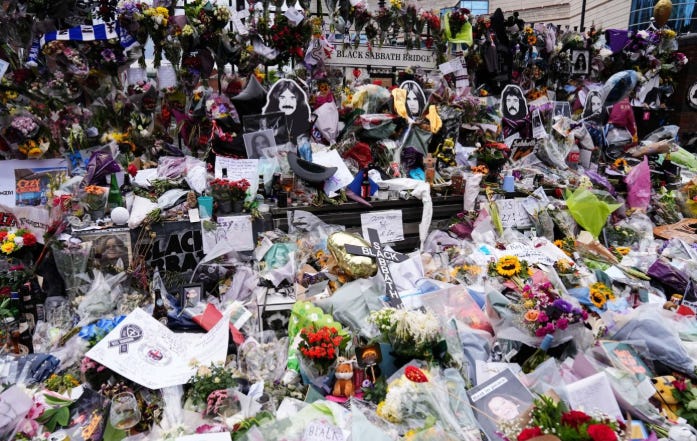
Now that he’s gone, it’s hard to fit Ozzy’s legacy into a neat little box. The final concert feels like a fitting tribute. But his actual death? It happened quietly. No bats. No screams. Just an old man passing peacefully with his wife by his side.
Was Ozzy a satanist? A saint? A victim? A monster? A genius? A joker?
The answer is yes. To all of it.
Ozzy’s death didn’t just mark the end of Black Sabbath. It marks the beginning of something that has not yet taken form.
Sabbath scared people because they told the truth. They took what was taboo and profane and made it profound. They exposed what polite society refused to say out loud: war is theater and madness is a reasonable response to the modern life.
But what was once a subversive howl has become part of the pop culture soundtrack.
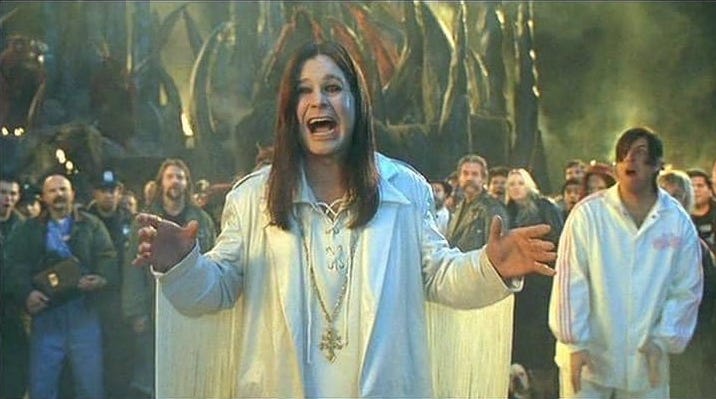
The devil’s chord no longer gets banned. It gets licensed. Inducted into the Rock and Roll Hall of Fame. And featured in commercials.
We took an outcast prophet of doom and turned him into a punchline. We missed the message completely. In 2025, Black Sabbath’s warnings no longer scare us. Because, now, we live in the devil’s interval.
Look around. Sabbath’s lyrics have become headlines. Genocide is televised. Trump rages and cuts deals back stage. The Epstein drama lingers like radioactive fog—unresolved and dissonant. Conspiracy isn’t fringe. It’s political currency.
Ozzy sang of war profiteers. And we have Haliburton and Raytheon at the top of the Dow Jones. He sang of religious corruption, and we got child abuse covered up by churches and billionaires alike. He sang of madness and social isolation, and we live through it in every school shooting.
Sabbath didn’t predict these things. They felt them. They didn’t celebrate darkness. They held it up to the light. That’s why their music still cuts through the noise today. Darkness didn’t die. It got digitized. Monetized. And commodified.
This is to take nothing away from their music or the man behind it. As I revisit their records, I still feel the power of them. Transformative. Unsettling. Full of rage and pain that speaks directly to my soul.
Their songs are modern psalms. Their riffs battle hymns. Apocalyptic gospel to the eternal struggle of man yearning to be free in the face of crushing adversity. In a world where we can no longer tell man from machine, Black Sabbath endures.
He’s gone, but his warnings will long reverberate.
So you children of the world / Listen to what I say / If you want a better place to live in / Spread the word today / Show the world that love is still alive / You must be brave / Or you children of today / Are the children of the grave.
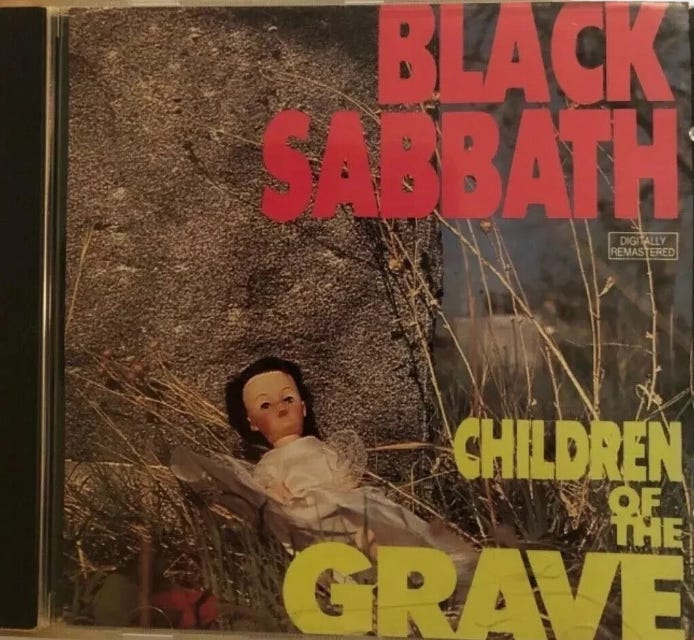
Let us hope this isn’t the last Sabbath.